Pick Your Path: A No-Nonsense Breakdown of Sport, Private, and Recreational Pilot Certificates

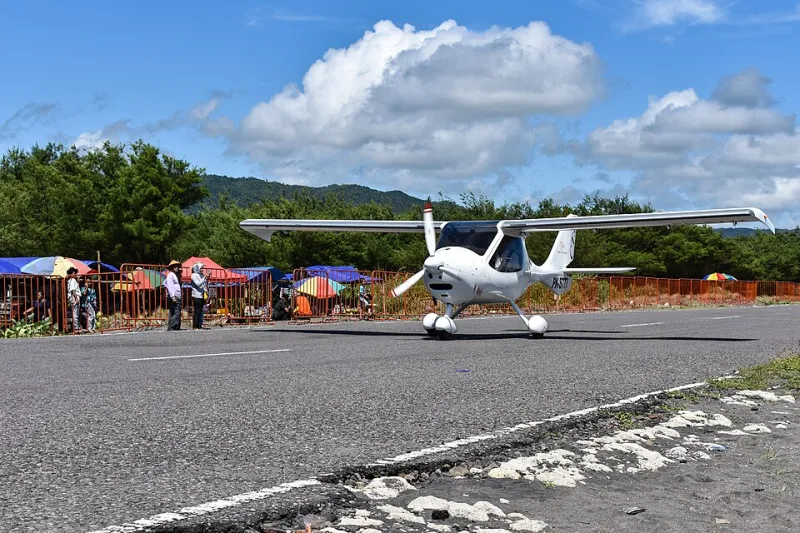
Photo by Photo by Avel Chuklanov on Unsplash on Unsplash
So you've decided you want to fly. Maybe you caught the bug at an airshow, maybe a friend took you up in their Cessna, or maybe you've just always looked at the sky and thought, that's where I belong. Whatever brought you here, welcome. Now comes the question that trips up almost every aspiring pilot before they even set foot in a cockpit: which certificate should you actually pursue?
The FAA offers three entry-level paths—Sport Pilot, Recreational Pilot, and Private Pilot—and the differences between them matter a lot more than most flight school brochures let on. Let's break it all down in plain English.
The Recreational Pilot Certificate: The Forgotten Middle Child
Honestly? The Recreational Pilot Certificate doesn't get much love, and there's a reason for that. Introduced in 1989, it was designed to be a cheaper, faster route to the cockpit than the full Private certificate. In theory, you only need 30 flight hours minimum to qualify. In practice, most students end up needing more.
Here's the catch: the limitations are significant. You're restricted to flying within 50 nautical miles of your home airport, you can't fly at controlled airports without additional endorsements, and you're limited to single-engine aircraft with no more than four seats. You also can't fly in airspace that requires radio communication without special training.
For most people, the Recreational certificate ends up being the worst of both worlds—not as cheap or accessible as Sport, not as capable as Private. It's genuinely rare to meet pilots who pursued this route, and most flight instructors will steer you away from it unless your circumstances are very specific.
The Sport Pilot Certificate: Freedom with a Lowercase 'F'
The Sport Pilot Certificate, introduced by the FAA in 2004, was a genuine game-changer for recreational flying. The minimum training requirement is just 20 flight hours, and the medical requirement is refreshingly simple: a valid U.S. driver's license works as your medical certificate, as long as you haven't had an FAA medical denied or revoked.
That driver's license medical provision is huge. It opened the door for thousands of people who couldn't pass a traditional third-class medical exam—whether due to age, minor health conditions, or the sheer hassle and cost of the process.
But Sport flying comes with real boundaries. You're limited to Light Sport Aircraft (LSA), which means aircraft with a maximum gross takeoff weight of 1,320 pounds (1,430 for seaplanes), a top speed of 120 knots, and no more than two seats. You can't fly at night, you can't fly in Class A, B, C, or D airspace without additional endorsements, and international flying isn't on the table.
If your dream is to fly a two-seat backcountry bush plane on sunny Saturday mornings, a Sport certificate might be absolutely perfect. If you're picturing flying your family to a vacation destination or making business trips in a faster aircraft, you'll hit walls quickly.
Typical cost range: $4,500–$8,000, depending on location and how quickly you progress.
The Private Pilot Certificate: The Full Package
The Private Pilot Certificate (PPL) is the gold standard for recreational and personal flying, and for good reason. The minimum requirement is 40 flight hours (though the national average is closer to 60–70), and you'll need to pass both a written knowledge test and a practical exam with an FAA examiner.
The payoff? Almost no practical restrictions on what you can fly or where you can go. You can carry passengers, fly at night, operate in controlled airspace, and eventually add ratings for instruments, multi-engine aircraft, and more. Want to fly a Piper Cherokee across three states to visit your college roommate? A PPL makes that possible.
You will need a third-class FAA medical certificate, which involves a physical exam with an Aviation Medical Examiner (AME). For most healthy adults, this is straightforward. It's worth noting that the FAA's BasicMed program (introduced in 2017) now gives PPL holders an alternative to the traditional medical process—another accessibility win for recreational pilots.
Typical cost range: $10,000–$16,000, and sometimes more in high-cost metro areas.
Side-by-Side: The Numbers That Matter
| Sport Pilot | Recreational Pilot | Private Pilot | |
|---|---|---|---|
| Min. Flight Hours | 20 | 30 | 40 |
| Medical Requirement | Driver's license | 3rd class FAA | 3rd class FAA (or BasicMed) |
| Night Flying | No | No | Yes |
| Passenger Limit | 1 | 1 | No limit |
| Aircraft Types | LSA only | Single-engine, 4-seat max | Most GA aircraft |
| Avg. Cost | $4,500–$8,000 | $5,000–$9,000 | $10,000–$16,000 |
So Which One Is Actually Right for You?
Here's the honest answer: for most people with serious flying ambitions, the Private Pilot Certificate is worth the extra investment. The limitations of Sport and Recreational certificates have a way of becoming frustrating faster than you'd expect. You'll want to take a friend flying. You'll want to land at a towered airport. You'll want to fly home after sunset.
That said, Sport flying is a genuinely wonderful world if your goals align with it. The LSA community is vibrant, innovative, and incredibly passionate. If you love the idea of flying a sleek modern aircraft like a Flight Design CTLS or a Vans RV-12, and you're happy keeping things local and daytime-only, Sport flying is a legitimate and deeply satisfying lifestyle—not a consolation prize.
The Recreational certificate? Unless a specific situation makes it your only option, most instructors and experienced pilots will tell you to skip it.
One More Thing Worth Saying
Don't let the certificate conversation paralyze you. The best path is the one that gets you in the air. Talk to your local flight school or EAA chapter, go for an introductory flight, and let your actual flying experience help shape the decision. The aviation community is full of people who started one place and ended up somewhere else entirely—and loved every minute of the journey.
You can always build on what you earn. A Sport certificate can become a Private certificate with additional training. The sky, as they say, is the limit.