Cleared for Takeoff at 65: Why Retirement and Sport Aviation Are a Perfect Match

Photo: Baldwin Saintilus from USA, CC BY 2.0, via Wikimedia Commons
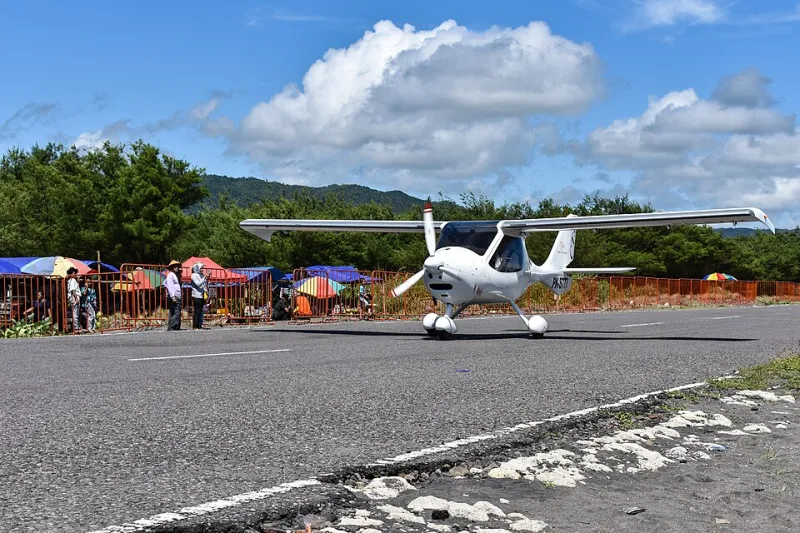
There's a guy at a grass strip outside of Knoxville, Tennessee who spent 35 years selling commercial insurance. He retired at 63, bought a used Light Sport Aircraft, and now logs more flight hours per month than most weekend warriors half his age. Ask him what changed, and he'll grin and say, "I finally have the time to actually fly."
He's not an outlier anymore.
Across the country, sport aviation is quietly attracting a wave of older pilots — and brand-new ones — who are discovering that the years after a traditional career can be the most exhilarating flying of their lives. The combination of flexible schedules, reduced financial pressure, and a genuine hunger for meaningful activity has made recreational flying an almost natural fit for the retirement chapter.
Why Retirement Is Actually the Best Time to Learn to Fly
Here's something flight schools don't advertise loudly enough: older students often make excellent pilots. Decades of professional life tend to build exactly the kind of disciplined, methodical thinking that aviation rewards. Retirees aren't in a hurry. They don't squeeze lessons between school pickups and conference calls. They show up prepared, they study carefully, and they take the process seriously.
Tom Hendricks, a retired high school principal from central Ohio, earned his Sport Pilot Certificate at age 67. "I'd always wanted to fly, but I told myself it was for younger people," he says. "My instructor was 34. He told me on my first lesson that my biggest obstacle wasn't age — it was the story I'd been telling myself about age. That stuck with me."
The Sport Pilot Certificate, introduced by the FAA in 2004, remains one of the most accessible entry points in general aviation. It requires fewer flight hours than a Private Pilot Certificate, allows flying in a wide range of Light Sport Aircraft, and — crucially for many older aviators — doesn't require a traditional FAA medical certificate. Instead, a valid US driver's license serves as proof of medical fitness, removing a significant administrative and emotional hurdle for pilots managing the ordinary health realities of getting older.
Navigating the Medical Piece Without the Anxiety
Let's be honest: the medical conversation is the one older aspiring pilots dread most. And it's worth addressing directly rather than tiptoeing around it.
Under the Sport Pilot rules, flying a Light Sport Aircraft with a valid driver's license means you're responsible for self-certifying that you're fit to fly — essentially, if your doctor hasn't told you not to drive, you can legally fly under this category. That said, the aviation medical community strongly encourages pilots over 60 to stay engaged with their primary care physicians and to be candid about any conditions that could affect situational awareness, reaction time, or cardiovascular health.
Aviators who want to fly heavier aircraft or carry more than one passenger will need a third-class medical, which has its own set of considerations for older applicants. The FAA's AOPA Medical Certification Services team is genuinely helpful here — they offer free consultations to help pilots understand whether existing conditions are likely to be an issue before spending money on an official exam.
The bottom line: the medical piece requires honest self-assessment, not fear. Many pilots in their 60s, 70s, and even 80s hold valid medicals and fly regularly. The conversation is worth having.
The Social Side Nobody Talks About
Retirement can be surprisingly isolating. The built-in social structure of a career — the colleagues, the routines, the sense of shared purpose — disappears almost overnight. For many retirees, finding a new community becomes just as important as finding a new hobby.
This is where sport aviation does something that gym memberships and golf leagues often don't: it creates genuine belonging.
Local EAA chapters, fly-in breakfasts, grass strip communities, and airfield lounges have a culture that's hard to replicate elsewhere. There's a warmth to aviation social circles that veterans of the community describe almost universally. You show up as a student, and within a few weeks you're getting hangar flying tips from a 78-year-old former crop duster who insists on buying you coffee. The knowledge-sharing is constant, the humor is terrible, and the friendships tend to stick.
For retired pilots who already hold certificates from earlier in their careers, returning to flying after a long break — a "rusty pilot" situation — often means reconnecting with a community that never really went anywhere. Wings programs, flight review courses tailored to returning aviators, and organized rusty pilot clinics at local airports make the re-entry far less intimidating than people expect.
The Financial Reality: It's More Manageable Than You Think
Aviation has a reputation for expense that's partly earned and partly exaggerated. The Sport Pilot pathway specifically was designed to bring costs down, and for retirees who've spent decades building financial stability, the math often works better than it did at 30.
A used Light Sport Aircraft — something like a well-maintained Zenith 601 or a Kitfox — can be acquired for $25,000 to $60,000, a range that compares favorably to a boat, an RV, or a second vehicle. Operating costs on a simple LSA are genuinely modest: fuel burns of 4 to 6 gallons per hour on a 100LL-burning two-seater add up slowly. Annual inspections, while not trivial, are far less expensive than the maintenance bills on complex aircraft.
For pilots who don't want to own outright, flying clubs with LSA fleets have expanded significantly over the past decade. Monthly dues in the $100–$200 range plus hourly wet rates can keep a retiree flying regularly without the ownership overhead.
A Second Act Worth Chasing
The pilots who land at grass strips in their late 60s and 70s — whether they're returning after decades away or strapping in for the very first time — tend to share one consistent observation: they wish they'd done it sooner. Not because the years before retirement were wasted, but because they underestimated how much flying would give back.
Purpose. Community. A reason to study, to plan, to show up. A view of the world that, quite literally, most people never see.
Sport aviation doesn't care how old you are when you land here. It just cares that you showed up.