Not the Pilot, But Definitely Part of the Flight: How Non-Flying Partners Are Finding Their Place in Sport Aviation
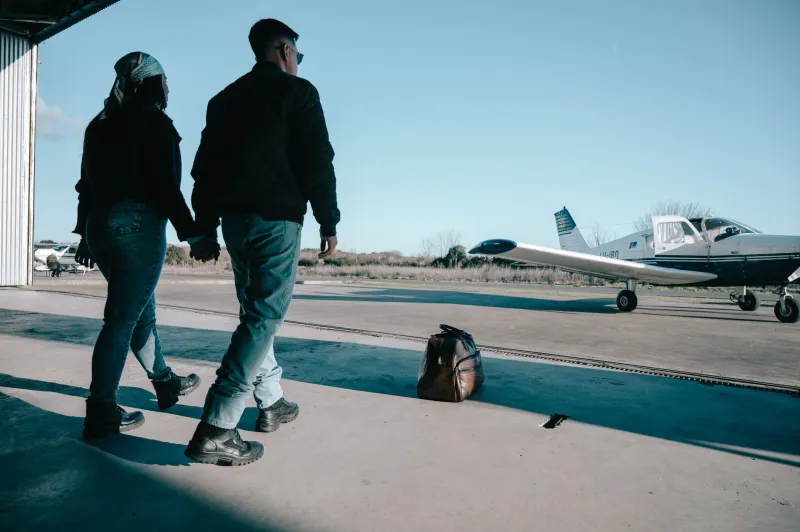
Ask any pilot what their biggest challenge was in getting into sport aviation, and you'll hear a familiar list: the cost, the time commitment, the learning curve. But buried somewhere on that list—often unspoken—is another challenge entirely: convincing the people they love that this whole flying thing is actually a good idea.
What's interesting, though, is what happens after that initial skepticism fades. Because for a lot of non-pilot partners, what starts as polite tolerance of a spouse's new obsession has a funny way of turning into something else. Something that looks a whole lot like belonging.
The Reluctant Convert
Tamara Ohlsen never planned on becoming an aviation person. When her husband Dave started working toward his sport pilot certificate at their local grass strip in central Ohio, she showed up to the airfield exactly once in the first three months—and mostly to make sure he hadn't lost his mind.
"I thought it was going to be this whole thing where I'd be a flying widow on weekends," she says with a laugh. "And then one Saturday I actually stayed for a few hours, and I met the people there, and I just... got it."
Got it is an understatement. Two years later, Tamara runs the social media accounts for her local flying club, organizes the annual fly-in cookout, and has developed what she calls an "embarrassing" knowledge of light sport aircraft. She has no interest in flying herself—heights are still a hard no—but she's as embedded in the community as anyone who's logged hours.
Her story isn't unique. Across small airfields and grass strips all over the country, non-pilot partners are quietly becoming some of the most essential people in sport aviation communities.
Finding the Role That Fits
Here's the thing about small airfield culture: there's always something that needs doing, and it almost never requires a pilot certificate to do it.
Some non-pilots, like Tamara, gravitate toward the social and organizational side of things. They're the ones who remember birthdays, coordinate potlucks, and make sure the new family that showed up at the fly-in doesn't stand awkwardly by themselves for two hours. That kind of social glue is genuinely undervalued, and the communities that have it are noticeably warmer than the ones that don't.
Others find their niche in more technical directions. Marcus Webb, whose partner flies a Zenith 750 out of a private strip in rural Tennessee, started photographing aircraft almost by accident—he needed something to do while waiting around during long maintenance days. Now his shots have been featured in two regional aviation newsletters, and pilots regularly ask him to document their first flights or restoration completions.
"I know more about camera angles for aircraft than most aviation photographers," Marcus says. "I know which light is good for catching a prop blur, how to position for takeoff shots. I've never left the ground and I'm somehow an aviation photographer."
Trip planning is another area where non-pilot partners often shine. Cross-country flying involves a surprising amount of logistics that have nothing to do with the actual flying—finding pilot-friendly restaurants near airfields, scouting interesting destinations within range, booking accommodations near small airports that don't have rental cars waiting. Partners who enjoy that kind of detailed planning often find it's a genuinely valuable contribution, not just busywork.
The Language You Learn Without Trying
One of the unexpected side effects of being deeply involved in an aviation community—even as a non-pilot—is that you absorb an enormous amount of knowledge just through proximity.
Ask a longtime non-pilot partner to explain the difference between a sport pilot certificate and a private pilot certificate, and they'll probably nail it. Ask them why the winds matter for a cross-country, or what a METAR is, or why their partner gets twitchy when the ceiling drops below a certain altitude, and they'll give you a real answer.
This matters more than it might seem. Partners who understand the basics of what their pilot is dealing with are better equipped to be genuinely supportive—not just cheerleaders, but actual collaborators. They know when to be flexible about a canceled trip because the weather turned, and they know when the pilot is being overly cautious versus genuinely smart. That kind of informed support is different from the blind encouragement that can sometimes push pilots toward bad decisions.
"I used to think he was being a baby when he'd cancel a flight," admits Lisa Carruthers, whose husband flies a Remos GX out of a small field in northern Georgia. "Now I can actually look at the forecast with him and understand what he's seeing. It changed the whole dynamic. We make these decisions together now."
The Kids Who Grew Up at the Airfield
It's worth talking about what happens when the non-pilot partners are the youngest members of the family. Kids who spend their weekends at small airfields develop a relationship with aviation that's different from anything you'd get from a textbook or a museum visit.
They watch aircraft get built and repaired. They hand tools to adults who explain what they're doing. They learn to read windsocks and understand why a pilot does a walk-around before every flight. And a meaningful number of them eventually decide they want to be the one in the left seat.
The pipeline from "airfield kid" to sport pilot is real, and it runs straight through the non-pilot side of aviation families. Parents who aren't pilots themselves are still raising the next generation of pilots simply by creating a life where aviation is normal and accessible.
You Don't Have to Fly to Be Part of This
Sport aviation has a reputation—sometimes deserved—for being a bit insular. The learning curve is steep, the vocabulary is thick, and if you don't fly, it can feel like there's an invisible velvet rope you're not getting past.
But the communities built around small airfields and light sport flying are often different from that image. They tend to be smaller, more personal, and more genuinely welcoming to people who show up with curiosity and a willingness to be useful.
If you're the non-flying half of an aviation household, or if you've been hovering at the edges of your partner's flying life wondering if there's a place for you in it, the honest answer is: yes, there is. You just might have to define it yourself.
Bring a camera. Learn to make coffee in the hangar. Offer to handle the restaurant research for the next cross-country. Show up on a Saturday and just talk to people.
The flying village has room for everyone—even the ones who prefer to keep their feet on the ground.