Keyed Up and Frozen: How to Actually Sound Like You Belong on CTAF
Photo: Photo by Lance Cpl. Julia Cochrane, Public domain, via Wikimedia Commons
There's a special kind of panic that hits when you're three miles out from a busy uncontrolled field, four airplanes are inbound from every direction, and someone just keyed the mic for eight full seconds of dead air. If you've been there, you know. And if you haven't yet, you will.
The good news: radio work at non-towered airports is a skill, not a talent. It can be learned, practiced, and honestly, mostly scripted. Here's how the pilots who sound calm actually do it.
Why the Radio Matters More at Uncontrolled Fields
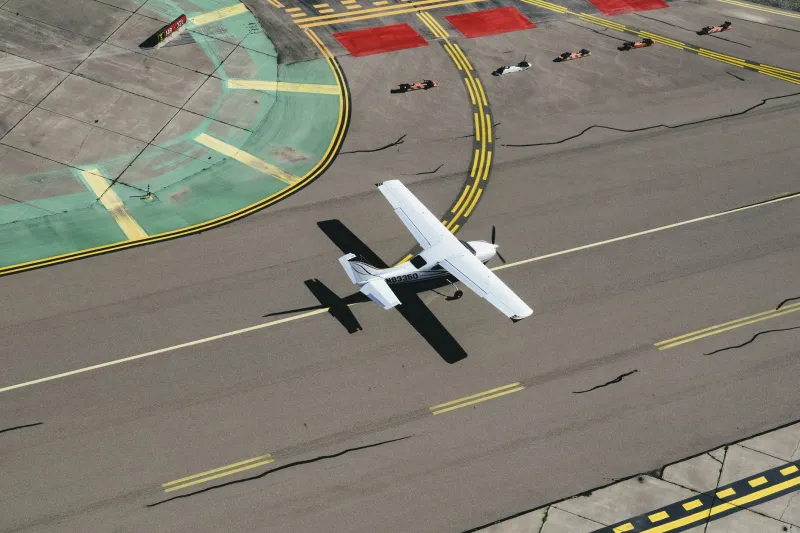
At a towered airport, a controller is your safety net. At Podunk Regional, the frequency is the safety net. Every position report you give is a data point another pilot uses to build a mental picture of the traffic pattern. Skip it, garble it, or bury it in filler, and that picture gets a blind spot.
The FAA's guidance on self-announce procedures is deliberately loose, which means the real standards get set by the community. And communities notice who sounds like they know what they're doing.
The Anatomy of a Good Position Call
Strip away the nerves and every solid CTAF call contains the same five ingredients:
- Who you're talking to — the airport name, twice. "Chandler traffic" at the start and end. Yes, it feels redundant. It's not — pilots tune in mid-sentence all the time.
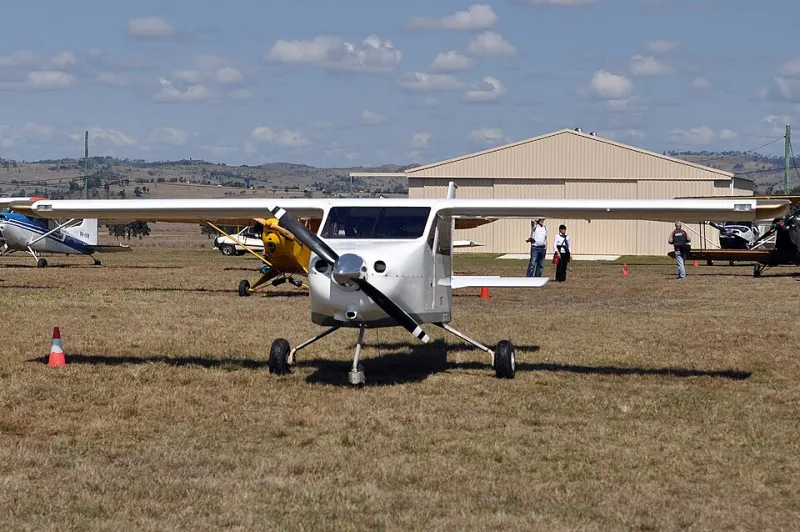
- Who you are — your aircraft type and color. "Green and white Cub" tells a Cessna driver exactly what to look for. "Cessna Two-Three-Whiskey" tells them nothing they can see.
- Where you are — a distance and direction that's actually useful. "Five miles southeast" beats "just north of the lake" every time.
- What you're doing — your intention, plainly stated. "Full stop," "touch and goes," "left downwind for Two-Six."
- The sign-off — airport name again, then let go of the mic.
That's it. Fifteen seconds, tops. If your call takes longer than a single breath cycle, it's too long.
When It Goes Wrong: Two Cautionary Tales
The simultaneous key-up. Two pilots transmit at once, nobody hears either call, and both turn base believing the pattern is clear. The fix isn't fancy: if you hear garbled noise or a partial transmission, say "[Airport] traffic, radio check, say again last transmitter." Ten seconds of patience prevents the classic mid-air geometry of two aircraft converging on the same runway.
The vague position report. "Traffic in the area, please advise" — the single most useless and yet most common call in general aviation. It announces nothing and invites everyone to transmit at once. If you want a traffic picture, give yours first. Lead by example; the frequency tends to follow.
Fly-In Weekends: Survival Mode
During a big fly-in weekend, CTAF can carry a dozen aircraft in the pattern plus arrivals on instrument approaches plus the inevitable guy narrating his entire cross-country. A few field-tested tactics:
- Listen before you talk. Spend a full two minutes on the frequency before your first call. You'll learn the flow, the runway in use, and who the loose cannon is.
- Shrink your calls further. During peak chaos, "Chandler traffic, yellow Cub, three-mile final, Chandler" is a complete and polite transmission.
- Never argue on frequency. If someone cuts you off or makes an unsafe move, resolve it on the ground, over coffee, like adults. Airborne lectures clog the one channel everybody needs.
- Watch for the non-radio traffic. Gliders, ultralights, and crop dusters sometimes monitor a different frequency or nothing at all. Your radio call doesn't clear the airspace — your eyeballs do.
Practice When It Doesn't Count
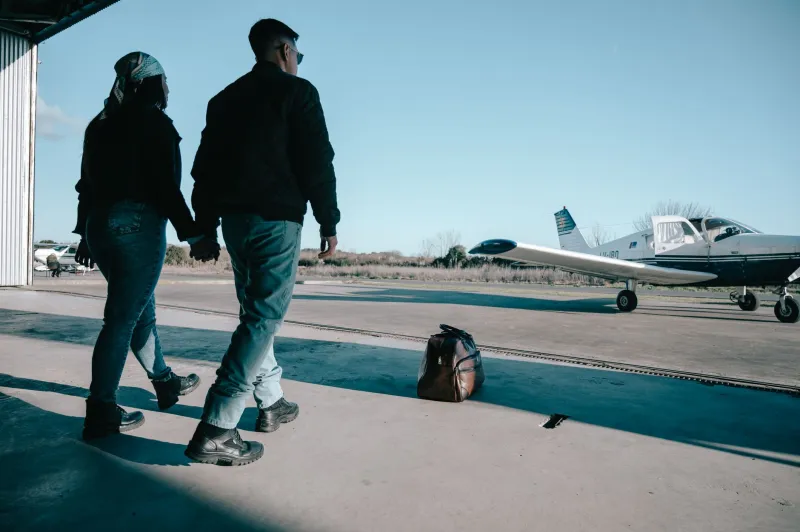
The secret of pilots who never freeze up? They rehearse. Sit in the hangar with the airplane parked and run your pattern calls out loud. Write them on a kneeboard card. Say them during the taxi out. By the time the words matter, they're muscle memory, and muscle memory doesn't care how many airplanes are in the pattern.
Nobody sounds like a pro on their first solo flight. But show up at enough small fields, make your calls clean and short, and pretty soon you'll be the voice other pilots use as their example of how it's done.